
Amarillo Parole Release Authority
The TDCJ Parole Division supervises people released from Texas prison on parole or mandatory supervision. The Texas Board of Pardons and Paroles makes release decisions. TDCJ Review and Release Processing checks eligibility, reviews the proposed residence plan, applies special conditions, and prepares the release certificate. The certificate is the key personal document. It states the reporting instructions and conditions that apply after prison custody ends.
TDCJ's official county cross-reference assigns Roberts County to the Amarillo District Parole Office in Region V. That makes Amarillo a real regional supervision node, not a prison or a Roberts County jail. Office assignment can still depend on an approved residence and may change. A person should never report to an address merely because a county directory lists it. Follow the certificate and direct TDCJ instructions.
5809 South Western Street, Suite 120
Amarillo, TX 79110
Phone: 806-355-9218
Fax: 806-353-9572
Confirm Amarillo Supervised Release
Begin with the TDCJ number. Search the separate TDCJ IVSS portal by name, SID, current TDCJ number, or prior TDCJ number. Open “View Details” only after matching identifiers. Limited details and notices can cover prison release, discharge, parole decisions, and supervision warrant events. IVSS is useful, but the underlying TDCJ record remains the official source.
- Match the person through TDCJ or IVSS using a state identifier.
- Determine whether the result says incarcerated, paroled, under mandatory supervision, or discharged.
- Obtain incarceration history and the actual release date from TDCJ records.
- Read the release certificate for the assigned office and reporting deadline.
- Contact the named district office for status-appropriate confirmation.
The Roberts County probation and parole page compares court supervision with TDCJ supervision. Do not call a person a parolee merely because the person left the county jail on bond or received probation from a court.
Amarillo Parole Status Records
TDCJ's current inmate search is strongest while someone remains incarcerated. After release, request incarceration history through the official no-fee email route at pia@tdcj.texas.gov. Provide full name and seven-digit TDCJ number, or exact birth date or approximate age plus county of conviction. Ask for release date, release type, and parole or mandatory-supervision status.
IVSS can add future notices when a registration is active. The official registration screen is shown through the TDCJ IVSS sign-in source.
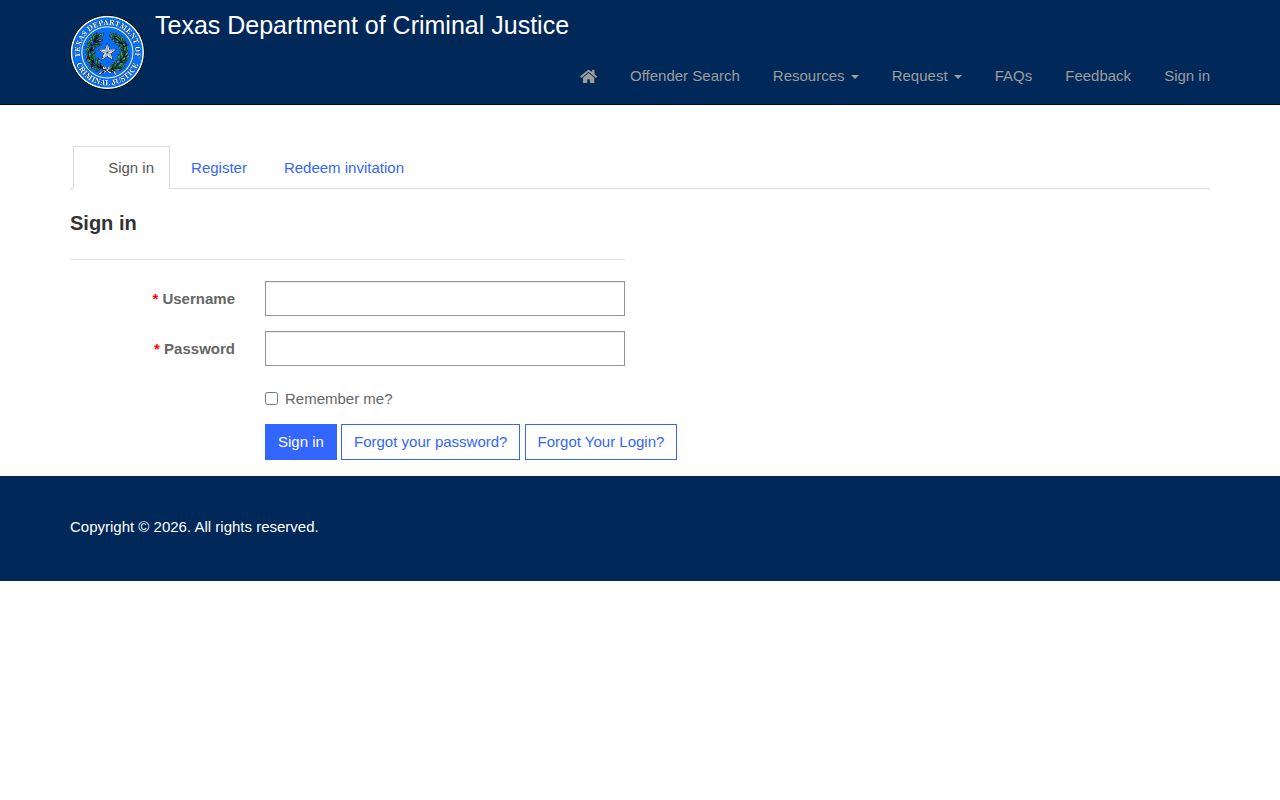
The portal account manages notifications. It does not replace the release certificate or prove that the Amarillo office is assigned in every Roberts County case.
| Source | Best use | Limit |
|---|---|---|
| TDCJ inmate search | Current state incarceration and projected date | Not a full released archive |
| TDCJ incarceration history | Actual release or discharge history | Requires a matched identity |
| IVSS | Status and registered event notices | Not the official record |
| Release certificate | Personal reporting terms and office | Held by TDCJ and the released person |
| District office | Current supervision administration | Disclosure may be limited |
Parole Versus Mandatory Supervision
Parole is a discretionary prison release approved by a Board panel. Mandatory supervision is a statutory supervised-release path, but eligibility and approval depend on offense date and exclusions. For many later offenses, the Board can deny discretionary mandatory supervision. Both statuses keep the person under TDCJ Parole Division authority until discharge or another lawful end.
Neither status is probation. Probation, formally called community supervision in Texas, is imposed by a court and usually managed through a local community-supervision department. A Roberts County court docket and signed order are the right starting points for probation. For parole, use TDCJ. Pretrial bond conditions are also distinct because bond release occurs before final disposition.
- Parole
- Conditional release from prison after Board approval.
- Mandatory supervision
- A supervised prison release controlled by eligibility law and, in many cases, Board review.
- Probation
- Court-ordered community supervision that does not itself prove a prison term.
- Discharge
- The lawful completion of the sentence or supervision term.
Amarillo Parole Warrant Status
A supervision warrant can follow an alleged violation, new charge, absconding, or another condition issue. “Absconding” means leaving supervision or failing to maintain required contact. A warrant does not itself prove final revocation. It can be issued, withdrawn, or followed by preliminary and revocation review. Arrest on the warrant can place the person in a county jail while TDCJ decides the supervision response.
TDCJ Victim Services explains that eligible registrants may receive notices for warrant issuance, withdrawal, arrest, and revocation. No separate Roberts County online absconder list was found. If an arrest occurs, ask the physical jail whether the person is held. Ask TDCJ about the supervision action. Those offices control different parts of the event.
8712 Shoal Creek Boulevard, Suite 265
Austin, TX 78757-6899
Phone: 800-848-4284
Email: victim.svc@tdcj.texas.gov
Amarillo Board Office Difference
The Amarillo Board office is in Suite 200 at the same South Western address, while the District Parole Office is in Suite 120. They do different work. The Board office participates in release decisions. The Parole Division office manages community supervision. Board case assignment generally follows the prison unit, so the Amarillo Board office is not automatically the voting office for every Roberts County case.
Ordinary Texas parole consideration is generally a file review, not a public courtroom hearing with a named-person calendar. A three-member panel votes, and two matching votes decide the case. Approval does not mean immediate physical release. Program conditions, plan review, certificate work, and records checks may remain. Review and Release Processing can address processing status at 512-406-5202 after approval.
5809 South Western, Suite 200
Amarillo, TX 79110
Phone: 806-359-7656
Email: AMBoardCorrespondence@tdcj.texas.gov
Note: Use the Board office for decision correspondence and the assigned Parole Division office for supervision administration after release.
Ending Amarillo Parole Supervision
Supervision ends through a lawful discharge or other formal action, not because a person stops appearing in a public search. Request TDCJ incarceration history and retain the discharge document. Maximum expiration can mark the end of the sentence calculation, but warrants, interruptions, or another case can affect a specific timeline. The district office can explain the current administrative route within disclosure limits.
A successful end to probation is not a TDCJ parole discharge. The Roberts County court and its community-supervision department control probation records. Expunction and nondisclosure are separate legal processes and should never be inferred from completion of supervision. A public record may later be restricted, but restriction is not proof of when custody or supervision ended.
Amarillo Release Plan Review
Before prison release, TDCJ reviews the proposed residence, required programs, discipline, special conditions, and statutory eligibility. Board approval begins this stage but does not complete it. Classification and Records audits the certificate, and a scheduled release date and location may be posted after processing. Both can change.
For someone planning to return to Roberts County, the Amarillo regional link is useful, yet the approved plan still controls. Family should not assume the Clements Unit is the release point or the South Western office is the first report site. Confirm the scheduled location with TDCJ and use the exact certificate on release day.
Public Record Search
Sponsored Results